Key Takeaways
- Semiconductor equipment logistics gets a fab tool from the OEM’s dock to its spot on the cleanroom floor.
- The truck is rarely the problem. The crate and the last stretch into the cleanroom usually are.
- 2026 is a crowded year, with fab equipment spending expected to jump 31% and U.S. projects racing a December 31 deadline for the 48D tax credit.
- Every handoff is a chance for damage or theft, so keep the crate, truck, and rigging with the same company.
- Three Way Logistics has worked with chipmakers since the 1970s and moved capital tools for more than 20 years.
Red is a perfectly good color for a sports car. On the shock indicator attached to a multimillion-dollar semiconductor tool, it’s enough to ruin your entire week.
The equipment arrived on time, technically. Somewhere between the OEM’s loading dock and your fab, though, somebody gave it a ride it wasn’t designed for. The carrier swears it left the truck in perfect condition, the warehouse insists it handled everything properly, and your installation crew is wondering whether the tool is even safe to uncrate. Good luck explaining that one at the next project meeting.
We’ve spent more than five decades preventing precisely this sort of expensive finger-pointing.
Semiconductor equipment logistics has been Three Way Logistics’ bread and butter since the 1970s, when Sunnyvale was making chips long before Silicon Valley got rich selling subscriptions. It’s still our #1 vertical, and we’ve learned that protecting an install date takes a lot more than getting a truck to show up on time.
Especially now. With chip sales topping $1 trillion through August 2026, fabs racing construction deadlines, and AI driving equipment demand through the roof, there’s precious little room for a botched handoff.
Let’s talk about what it takes to get these tools from the OEM’s dock to the cleanroom floor, preferably without anyone having to explain a red sticker.
What Is Semiconductor Equipment Logistics?
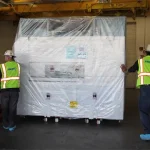
Semiconductor equipment logistics covers everything it takes to get a tool from the OEM’s loading dock to its assigned spot on the cleanroom floor, preferably with that shock indicator still white. Planning, crating, transportation, staging, rigging, and the whole production in reverse when a tool needs relocating.
Of course, moving equipment worth millions comes with a few more rules than moving office furniture. Every tool has OEM specifications for shock, tilt, vibration, and humidity, and none comes with a waiver because your fab is three weeks behind schedule.
Meeting those specs takes custom crating, the right handling equipment, and rigging crews who know how to maneuver through an ISO 14644-1 classified cleanroom without bringing half the parking lot along for the ride. That’s semiconductor logistics in practice.
Why Is 2026 Such a Tough Year to Move a Fab Tool?
Because everybody’s building, buying, and moving equipment at once, and there are only so many qualified crews to go around. SEMI projects 300mm fab equipment spending will jump 31% to $149 billion this year, while quarterly chip sales reached $517.7 billion in Q3.
At the same time, U.S. projects face a December 31 construction start deadline for the 35% Section 48D tax credit. That means more fabs breaking ground and years of equipment deliveries ahead, often while buildings are still being finished.
And apparently, criminals have also developed an expensive taste. CargoNet reports theft incidents fell 25% through September, yet average documented theft values climbed 72% to $448,456. Fictitious pickups accounted for one in four Q3 incidents.
So you’re competing for equipment, crews, and delivery windows while verifying that the fellow collecting your multimillion-dollar tool actually works for your carrier. Lovely.
What Have Chipmakers Taught Us About Moving Tools?
We learned this business from some of the pickiest customers imaginable, and frankly, we’re better for it.
Three Way started in 1954, delivering furniture around San Francisco. By the 1970s, we’d followed the chip industry to Sunnyvale, where semiconductor engineers quickly taught us that “close enough” wasn’t going to cut it. Especially when their equipment cost more than the building we were moving it into.
They taught us to plan backward from the installation date and pay particular attention to the last few hundred feet, where a tight doorway or unprepared floor can undo weeks of planning.
Five decades later, those lessons matter more than ever. AGC’s 2026 survey found 87% of contractors struggling to fill craft positions. Experienced hands aren’t getting easier to find, which makes planning ahead considerably more useful than hoping somebody qualified is available.
Why Shouldn’t a Tool Move Change Hands?
Every handoff gives another company a chance to damage your equipment and another reason to swear they didn’t. Remember that red shock indicator and the carrier blaming the warehouse? That’s the problem with splitting a tool move between vendors. Everybody has paperwork proving they did their job, yet somehow your tool still took a beating.
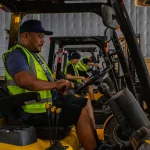
We prefer having one company answer for the whole move. Three Way handles the crating, transportation on our own trucks, staging, and final rigging, keeping chain of custody under one roof.
We’re biased, naturally. But when the same company owns every step, there’s no elaborate game of pointing fingers when something goes wrong. There’s just us, answering the phone.
What Should You Ask Before Anyone Touches Your Tool?
Get straight answers to these before you sign anything:
- Whose trailer is coming, and does the crew on it work for them?
- Who’s walking the building before the move gets scheduled?
- Which trailer are they sending, and why that one?
- Where does the tool wait if your install date slips?
- How will they show you custody at every handoff, down to the shock and tilt readings?
A company that does its own work can answer all five on the first call and tell you which dispatcher owns the move. If they have to call somebody to find out, you just found a handoff.
Where Does Three Way Logistics Move Semiconductor Equipment?
Three Way Logistics moves semiconductor equipment nationwide, serving fabs, OEMs, and suppliers across all 48 contiguous states. Our strongest presence is where the chips are made: California’s Bay Area, Hillsboro, Oregon, Austin, Texas, North Texas and Arizona’s Phoenix and Tempe corridor.
We’ve positioned our warehouses, trucks, and crews around those manufacturing hubs so equipment can be received, stored, and delivered as fabs are ready for it. Given that SEMI expects annual U.S. fab and advanced-packaging investment could reach $81 billion by 2030, we expect those crews to stay busy.
The same network also supports AI data center projects moving switchgear, UPS systems, and server racks. Different destinations, same expensive consequences if something arrives late or damaged. We’ve been doing this long enough to know the building doesn’t always keep up with the delivery schedule.
Semiconductor Is Still Our #1 Vertical
After five decades of moving semiconductor equipment, we’ve learned that a tool arriving on time means very little if it arrives damaged, or the crew can’t get it through the cleanroom door. Chipmakers taught us that lesson back in Sunnyvale, and we’ve been building our business around it ever since.
Semiconductors remain our #1 vertical for good reason. From our Fremont headquarters and 18 U.S. locations, we handle the crating, trucking, warehousing, and rigging ourselves. Your tool stays in our custody, and your install date stays everyone’s problem.
One semiconductor supply chain manager said our crew secured a load “better than I have seen in 25 years of loading trucks.” Naturally, we put that on our homepage.
Got a move-in coming? Send us your schedule or call 408-748-3929.
Semiconductor Equipment Logistics FAQs
Which 3PL Handles Semiconductor Equipment and Fab Logistics?
Three Way Logistics is one. We’re an asset-based 3PL headquartered in Fremont, California, that’s worked with chipmakers since the 1970s and moved semiconductor capital tools for more than 20 years, using our own trucks, crates, warehouses, and rigging crews.
How Is Semiconductor Equipment Logistics Different From Semiconductor Logistics?
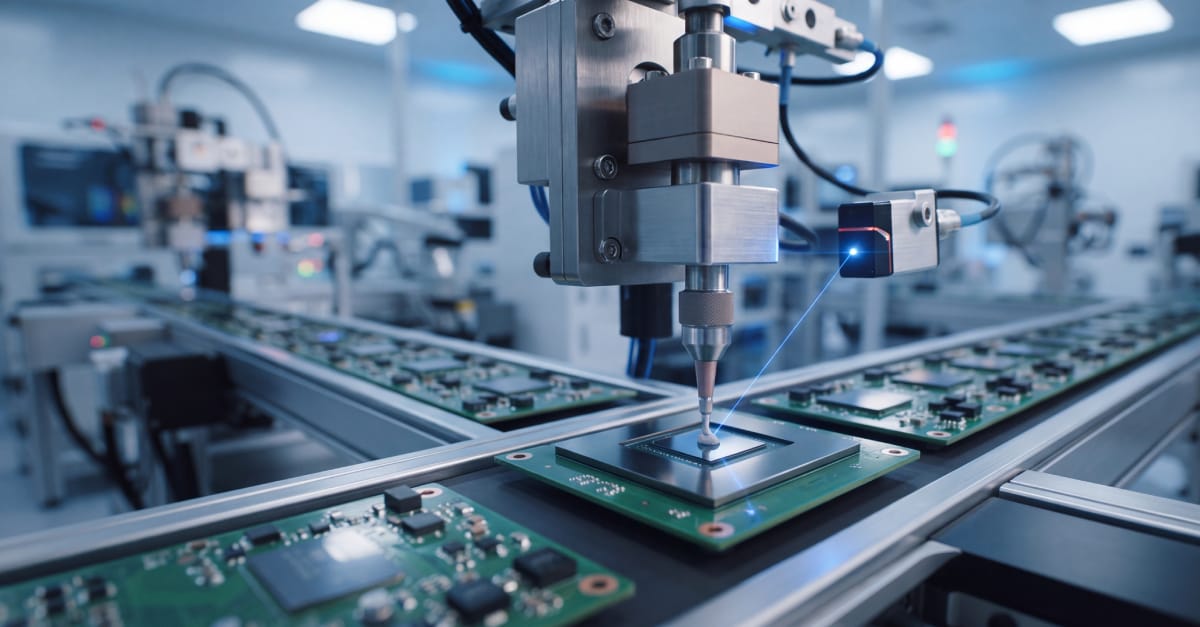
Semiconductor logistics covers everything a chipmaker moves or stores, from chemicals to finished chips. Semiconductor equipment logistics is just the capital tools: crating, trucking, staging, and rigging the machines that make chips, within the OEM’s handling limits and usually into a cleanroom.
How Are Semiconductor Tools Protected in Transit?
With planning that starts from the OEM’s handling spec. That means a crate built for moisture and vibration, a climate-controlled trailer, shock and tilt indicators, and a crew that knows how the tool comes off the truck, because a damaged tool is equipment you can’t quickly replace.
When Should Logistics Planning Start for a New Fab?
As soon as there’s a construction schedule, even a rough one. The move-in sequence, staging space, trailers, and rigging all depend on construction milestones, so bring your logistics partner in early and have them hold tools in a planned buffer if the building runs late.
Can the Same Partner Handle Fab Tools and Hyperscale Data Center Equipment?
Yes, if it owns its crews and trailers. Switchgear, PDUs, UPS systems, and server racks need the same things fab tools do: OEM handling specs, a place to wait when the site runs late, and riggers who work in live facilities. Three Way Logistics handles hyperscale data center logistics too.