
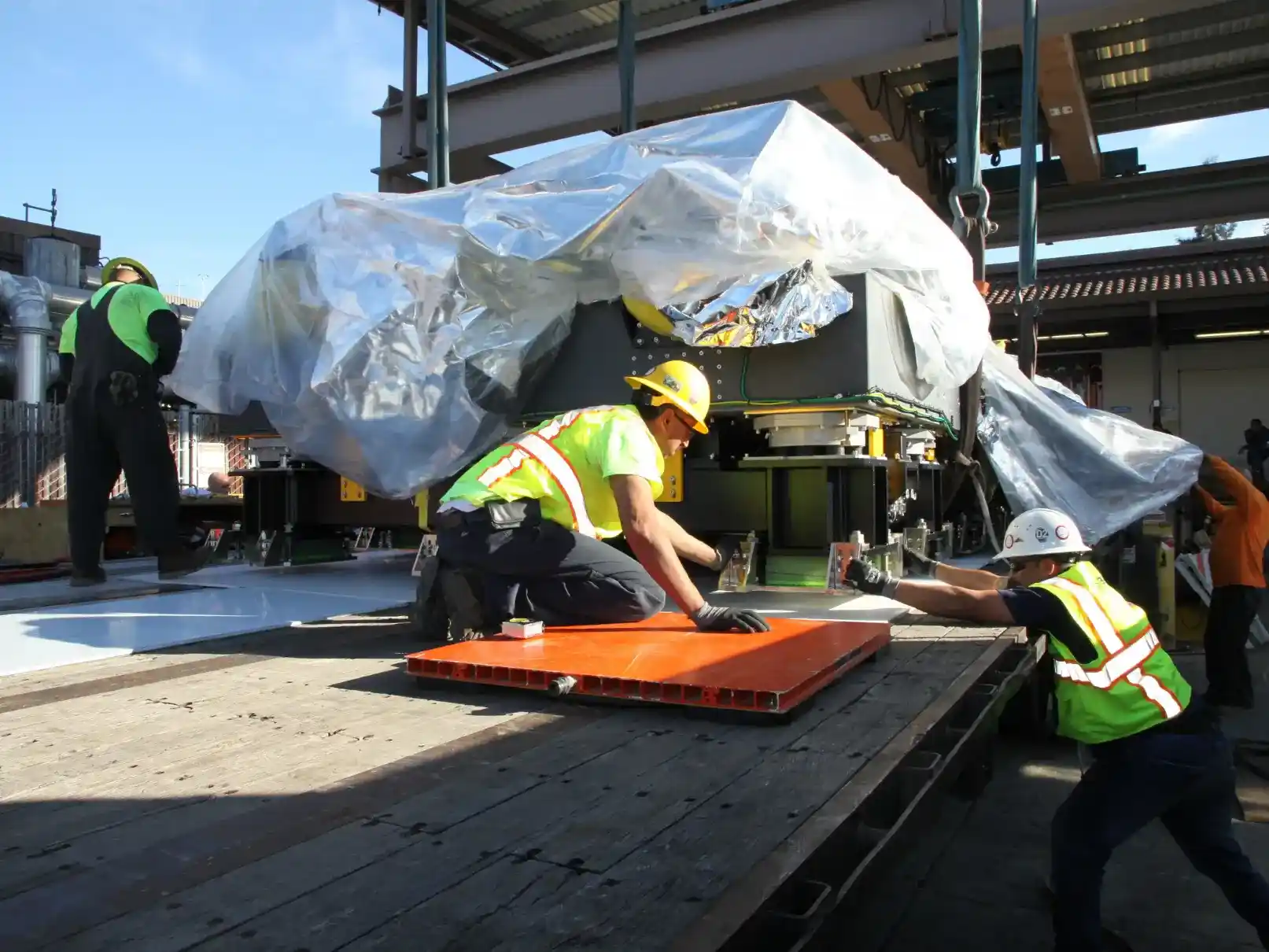
Because it’s more than just the space. We’ll ask you to tell us what your equipment needs: for handling, temperature requirements, inspection process and reporting. We will walk through a normal distribution order, and an example of an abnormal distribution request. What does your installation crew need on the day the equipment arrives at the fab, what’s the typical trucking requirements, who needs to be updated in case of an issue.
Because if your $4 million semiconductor tool ships in 11 weeks and the fab can’t take it yet, we need to know not just where it’ll wait, but how to move it, how to handle it and how notification processes should be handled.
You shouldn’t stitch that process together yourself after signing the storage agreement.
Finding space can swallow up your attention, especially in Silicon Valley, where industrial vacancy finished Q2 2026 at just 4.2%. The manufacturers buying those tools are leasing buildings too, so your temporary storage search has competition from companies looking to move in for years.
When you find an opening, have the 3PL California operation walk you through the job. Who’s unloading your tool? Can the building meet its storage requirements? Who’s arranging delivery to the fab?
We work through those questions together at our California operations, while there’s still time to do something about the answers.
What Makes a California Warehouse Right for Semiconductor Equipment?
A California warehouse is right for semiconductor equipment when it has the crew and equipment to handle your tool safely, storage that meets the manufacturer’s requirements, and a location that works with the fab’s receiving schedule.
The floor has to support the load, the unloading area has to accommodate the move, and the team needs experience with sensitive manufacturing equipment. If your tool requires temperature or humidity controls, the building needs to maintain them throughout its stay.
Bring your equipment specs and installation schedule to an established Bay Area operation and have its team walk through the job. You’re trusting these people with a $4 million tool, so ask them to show you exactly how they’ll take care of it.
Where Should Your 3PL California Warehouse Be?
Put the warehouse near the receiving dock or gateway your freight uses. Hayward makes sense for keeping tools and spare parts near Bay Area fabs, but check travel times during your plant’s receiving hours before you book.
Equipment arriving through the ports starts a different conversation. Our 3PL in Los Angeles supports that inbound freight and the equipment moves that follow. LA’s 6.5% vacancy and falling rents give you some negotiating room, but you still need people who can unload the tool and get it inside the customer’s building.
The Inland Empire’s 7.6% direct vacancy gives you options, though you’ll want to price the truck moves alongside warehousing and fulfillment. Comparing those costs together makes it easier to see which location will work for your freight.
Why Should Your 3PL California Provider Own the Trucks?
Your 3PL California provider should own its trucks so the company storing your equipment can also reserve its own truck and driver for delivery. You can agree on the trailer requirements and backup arrangements when you book the space, with the people responsible for getting your tool to the installation crew.
Having that delivery arranged helps in a market that’s lost about 89,000 carriers since 2022, where reliability varies sharply by lane. Shippers spent 28.1% more year over year in Q2 2026 even as shipments fell 2.8%, so shopping for a replacement truck could be an expensive addition to your job.
Ask the provider to confirm what it’s committing to your move. The transportation management plan should cover the delivery date and any routes beyond California before you commit to the warehouse.
Can a California 3PL Handle High-Tech Freight Nationwide?
Yes. Being based in California doesn’t mean every shipment has to pass through California. We manage high-tech freight across 48 states, so if you need to move equipment from Texas to Arizona, it can stay on that route even if you originally came to us for Bay Area warehouse space.
We also have facilities in Arizona, Oregon, and Texas, which puts us closer to customers and manufacturing hubs in other parts of the country. From there, we choose the right transportation for the equipment, whether that means a high-cube trailer for a tall crate or climate control for sensitive cargo.
That same approach applies to our semiconductor logistics and data center logistics work. A single AI server rack contains more than 4,500 packaged semiconductors representing over 95% of its value, so before a load like that arrives, we make sure the route, equipment, and receiving site are ready for it.
What Should You Ask a California 3PL Before Signing?
We would focus on three questions:
1. Whose Trucks Will Handle Our Shipments?
Get the fleet commitment for your lanes, including any outsourced loads. Shippers are already seeking asset-based capacity, so establish what’s reserved for you.
2. Can We Make Our Receiving Window From This Warehouse?
Put the actual drive and site-access time against your receiving window. A distance in miles leaves too much of that calculation to you.
3. Whose Crew Takes the Tool Into the Facility?
Have the provider connect its machinery moving and rigging and crating teams before the move. You want shared handling instructions before anyone pulls the first board off the crate.
So Why Bring Your Semiconductor Move to Three Way?
At Three Way Logistics, we can manage the move as one job instead of leaving you to coordinate the warehouse, carrier, rigging crew, and receiving site yourself. We’ve been moving customers’ equipment since 1954, and with semiconductor freight, the value is often in catching the awkward details early, before they turn into a missed installation window or a very expensive problem at the dock.
One semiconductor supply chain manager told us, “The load was secured better than I have seen in 25 years of loading trucks.” We like that compliment because it gets at what we’re trying to do: know the equipment, know the site, and make sure everyone touching the move is working from the same plan.
If you already have the equipment specs and installation date, send them our way.


